

Cold-Pressed Oil vs Refined Oil: Which Is Better for Everyday Cooking?
The cooking oil you use every day influences much more than the taste of your food. Its extraction process can also affect its natural aroma, colour, nutritional compounds and overall character.
Most households commonly choose between two broad categories: cold-pressed oils and refined oils. Although both can be used for cooking, they are produced differently and offer very different culinary experiences.
So, what exactly is the difference between cold-pressed oil and refined oil—and which one deserves a place in your kitchen?
Let us understand.
What Is Cold-Pressed Oil?
Cold-pressed oil is extracted by mechanically pressing selected seeds or nuts while limiting excessive heat during the extraction process.
Unlike heavily processed oils, cold-pressed oils undergo fewer processing stages. This helps them retain more of the ingredient’s naturally occurring colour, aroma, flavour and minor bioactive compounds.
Research reviews report that cold-pressed oils can retain compounds such as phenolics, phytosterols, carotenoids and tocopherols that may be reduced during intensive refining. However, the exact nutritional composition varies according to the seed, extraction method, storage and oil quality.
That is why authentic mustard oil smells distinctly pungent, groundnut oil has a warm nutty aroma, sesame oil carries its characteristic richness and coconut oil retains a naturally familiar fragrance.
Cold-pressed oil is not merely a cooking medium. It brings the original ingredient’s personality into your food.
What Is Refined Oil?
Refined oil generally undergoes multiple processing stages to remove impurities, odour, colour, free fatty acids and other unwanted components.
Depending on the oil and manufacturing method, these stages may include:
- Degumming
- Neutralisation
- Bleaching
- Deodorisation
- Filtration and other processing steps
Refining helps create oil with a neutral flavour, uniform appearance and predictable shelf stability. However, some naturally occurring components may also be reduced during these processes.
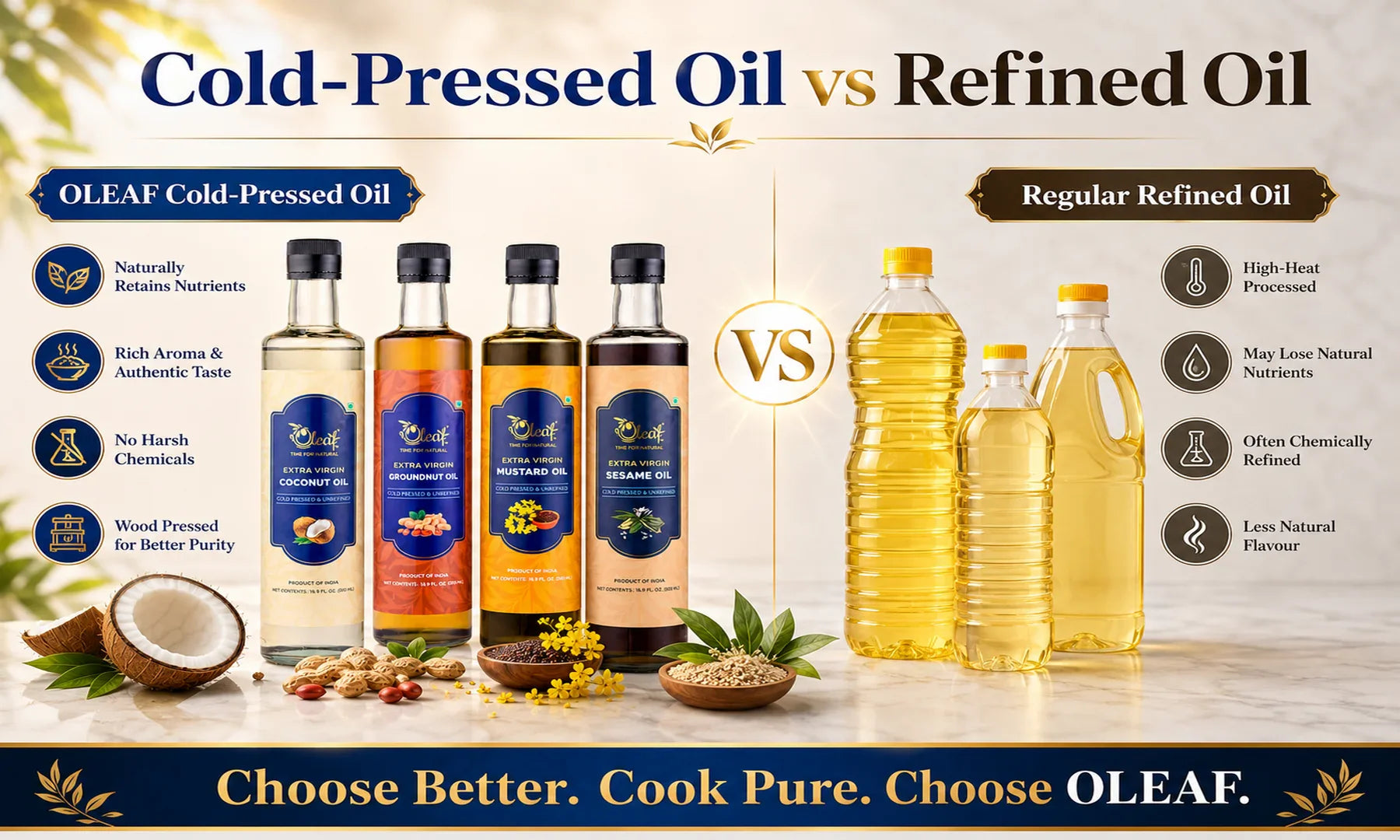
Refined oils are therefore generally designed for consistency and neutrality, while cold-pressed oils are chosen for their more natural flavour, aroma and minimally processed character.
Cold-Pressed Oil vs Refined Oil: Key Differences
| Feature | Cold-Pressed Oil | Refined Oil |
|---|---|---|
| Extraction | Mechanically pressed with controlled heat | Undergoes several refining stages |
| Processing | Minimally processed | More extensively processed |
| Natural Aroma | Usually retains its characteristic aroma | Generally neutral or deodorised |
| Natural Flavour | Distinctive and ingredient-specific | Mild or almost flavourless |
| Colour | May retain its natural colour | Usually lighter and more uniform |
| Bioactive Compounds | May retain more naturally occurring minor compounds | Some compounds may be reduced during refining |
| Cooking Experience | Adds depth and character to recipes | Designed to avoid influencing flavour |
| Best For | Everyday traditional cooking, sautéing, dressing and flavour-focused dishes | Applications requiring a neutral taste |
Why Are More Families Choosing Cold-Pressed Oils?
1. Less Processing, More Natural Character
One of the biggest reasons people choose cold-pressed oil is its simpler extraction process.
It stays closer to its natural source and does not need to be stripped of its original aroma and flavour merely to appear neutral.
For families moving towards cleaner, more thoughtfully selected pantry ingredients, this makes cold-pressed oil an attractive everyday choice.
2. Rich, Authentic Aroma
The aroma of an oil is an important part of the cooking experience.
Cold-pressed mustard oil adds a bold and pungent character to traditional preparations. Groundnut oil brings a warm nuttiness, while sesame and coconut oils contribute their own distinctive profiles.
These natural flavours can enhance a recipe without depending heavily on artificial flavouring or excessive seasoning.
3. Naturally Occurring Minor Compounds
Cold-pressed oils may retain various naturally occurring compounds that are associated with the original seed or nut.
Studies comparing cold-pressed and refined oils frequently report differences in compounds such as tocopherols, phenolics and phytosterols. The quantity retained is not identical across every oil, and cold-pressed oil should not be treated as a medicine or cure. It is simply a less intensively processed option for a balanced kitchen.
4. Better Connection With the Ingredient
When you open a bottle of authentic cold-pressed groundnut oil, it should remind you of groundnuts. Mustard oil should carry its recognisable sharpness, while coconut oil should smell naturally coconut-like.
This connection between the raw ingredient and the finished product is an important marker of authenticity.
5. Premium Quality You Can Taste
A carefully produced cold-pressed oil may cost more than a mass-produced refined oil because the process prioritises quality rather than maximum extraction yield.
You are paying for:
- Carefully selected seeds or nuts
- Controlled mechanical extraction
- Smaller-batch processing
- Natural aroma and flavour
- A more authentic cooking experience
For many households, that difference becomes noticeable from the very first meal.
Is Cold-Pressed Oil Suitable for Indian Cooking?
Yes, cold-pressed oils can be used in a wide range of Indian recipes. The right choice depends on the oil, its flavour profile and the cooking method.
Cold-Pressed Groundnut Oil
Its balanced, nutty taste makes it suitable for:
- Everyday sabzis
- Parathas and theplas
- Dal tadka
- Stir-frying
- Regional Indian preparations
Cold-Pressed Mustard Oil
Its bold flavour works beautifully in:
- Pickles
- Bengali and North Indian dishes
- Marinades
- Seasonal vegetables
- Traditional curries
Cold-Pressed Sesame Oil
Its rich, distinctive character complements:
- South Indian cooking
- Chutneys
- Dals
- Vegetable preparations
- Traditional recipes
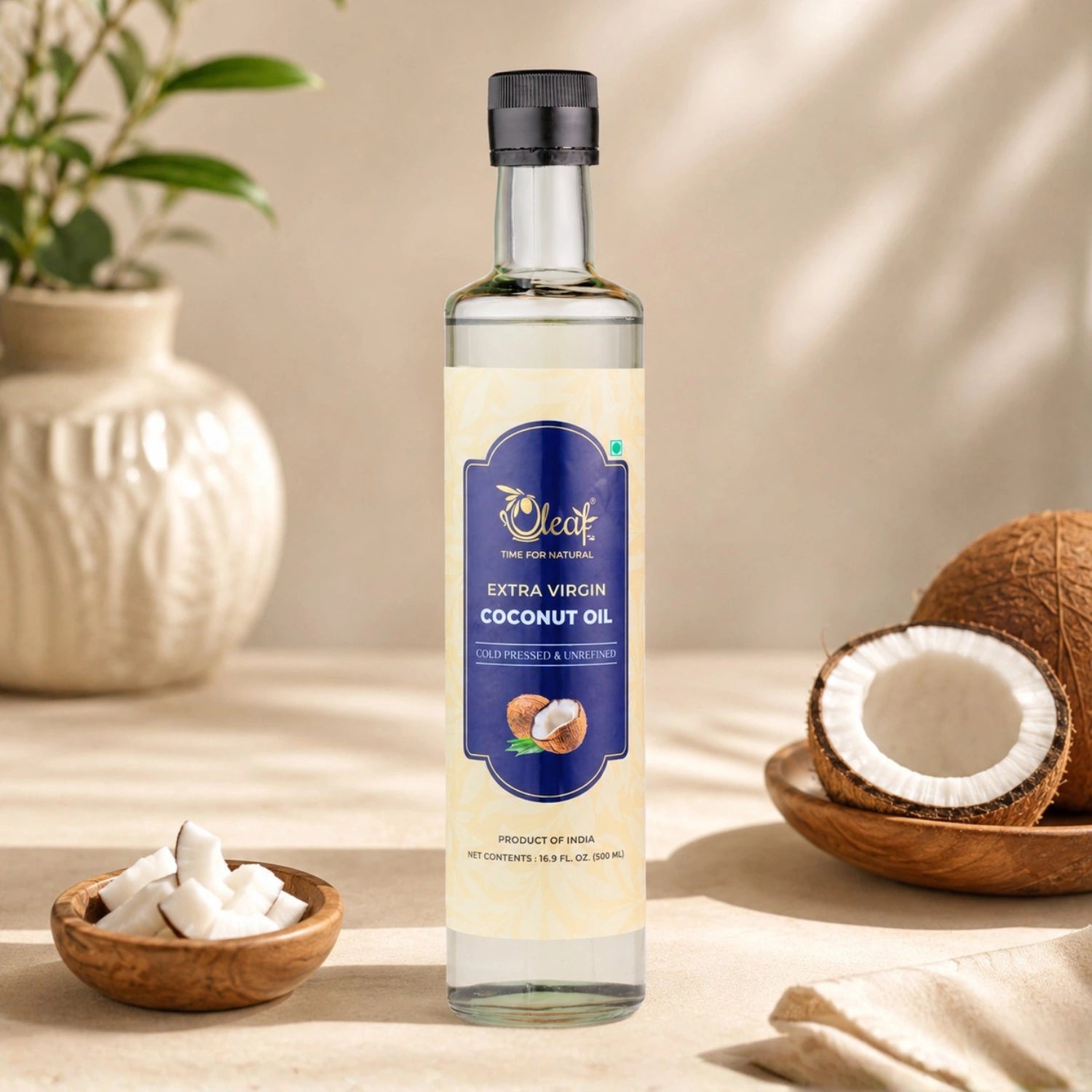
Cold-Pressed Coconut Oil
Its naturally aromatic profile is ideal for:
- South Indian dishes
- Light sautéing
- Curries
- Baking
- Selected breakfast recipes
Every oil has a different fatty-acid composition, flavour and response to heat. Avoid overheating oil until it repeatedly smokes, and do not reuse the same oil excessively for frying.
Does Refined Oil Have Any Advantages?
Refined oil is not automatically unsuitable for every kitchen.
Its neutral flavour can be useful when you do not want the oil to affect the taste of a recipe. Refining can also improve consistency, remove undesirable odours and increase stability in certain oils.
The decision is therefore not about fear. It is about understanding how your oil was made and choosing according to your priorities.
Choose refined oil when neutrality is the main requirement. Choose cold-pressed oil when you value authentic aroma, natural flavour and a less intensively processed product.
How to Identify a Good Cold-Pressed Oil
Not every bottle carrying the words “natural” or “premium” offers the same quality. Before purchasing, check the following:
Read the Label
Look for the exact oil name, extraction method, ingredient declaration, nutritional information, batch number and FSSAI details.
Check the Ingredient List
A single-source oil should have a simple ingredient declaration. Avoid assuming that attractive packaging alone guarantees purity.
Notice the Aroma
Authentic cold-pressed oils usually carry the recognisable aroma of their source ingredient.
Do Not Expect Every Oil to Look Identical
Natural colour may vary slightly between batches because seeds, crops and harvest conditions can differ.
Choose Transparent Brands
Prefer brands that clearly communicate their sourcing, manufacturing practices, packaging and quality standards.
Why Choose OLEAF Cold-Pressed Oils?
At OLEAF, we believe an everyday ingredient should be made with everyday honesty.
Our cold-pressed oil range is created for families who value natural flavour, thoughtful processing and premium quality without unnecessary complexity.
The OLEAF Difference
- Made using carefully selected ingredients
- Wood-pressed and cold-extracted
- Naturally rich aroma and authentic flavour
- No added preservatives
- Produced with a focus on quality and purity
- Suitable for flavourful everyday Indian cooking
Explore the OLEAF Cold-Pressed Oil Collection
Cold-Pressed Groundnut Oil
Made from carefully selected groundnuts, it delivers a naturally rich and nutty aroma that complements everyday Indian cooking.
Best suited for: Sabzis, dals, parathas and regular family meals.
CTA: Shop Cold-Pressed Groundnut Oil
Cold-Pressed Mustard Oil
Bold, pungent and authentically flavourful, this oil brings traditional character to Indian recipes.
Best suited for: Pickles, marinades, curries and regional dishes.
CTA: Shop Cold-Pressed Mustard Oil
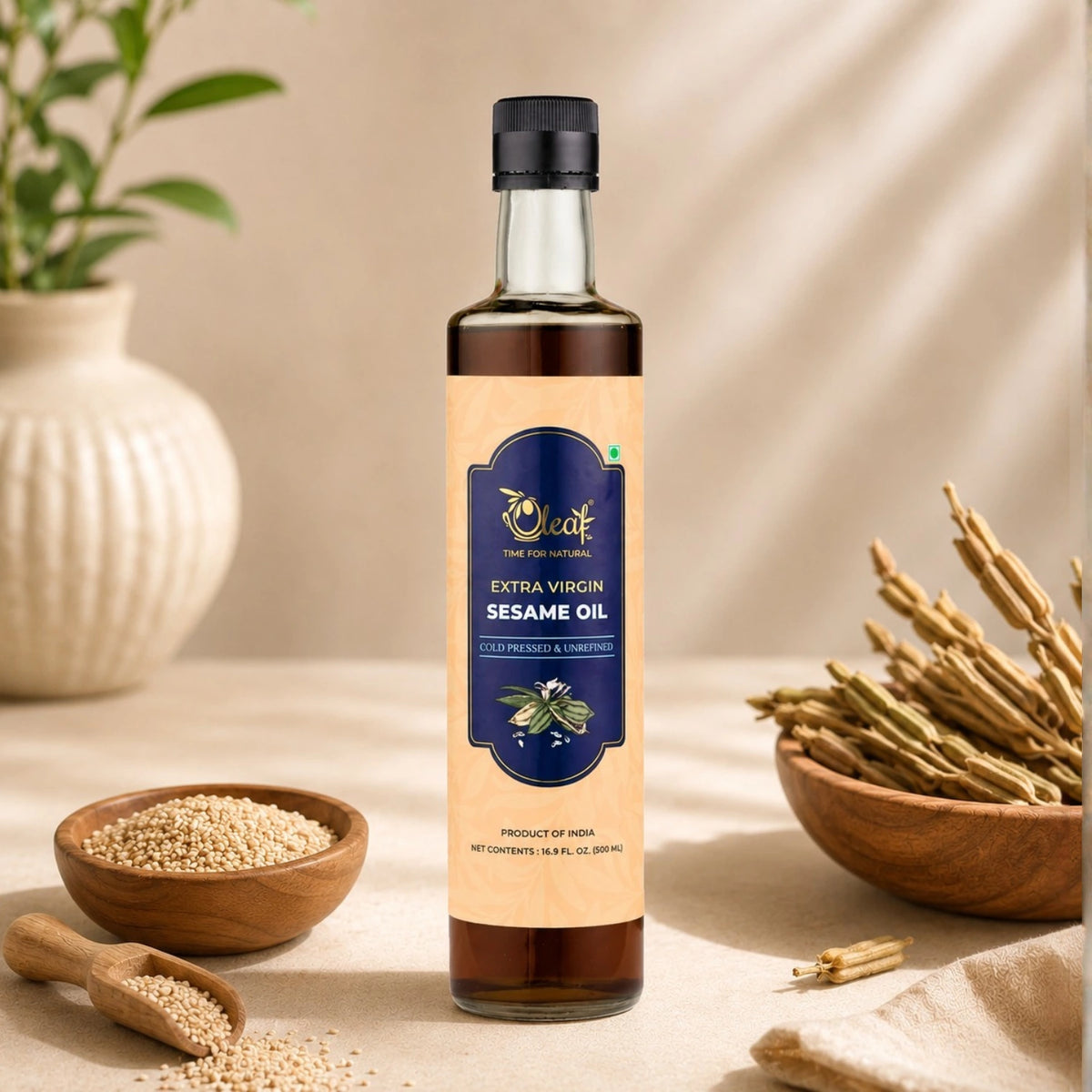
Cold-Pressed Sesame Oil
A premium oil with a naturally distinctive nutty profile and deep traditional roots.
Best suited for: South Indian cooking, chutneys, dals and vegetable preparations.
CTA: Shop Cold-Pressed Sesame Oil
Cold-Pressed Coconut Oil
Naturally aromatic and versatile, it adds a clean coconut character to both traditional and modern recipes.
Best suited for: Curries, sautéing, baking and South Indian dishes.
CTA: Shop Cold-Pressed Coconut Oil
The Final Verdict
Both cold-pressed and refined oils serve different purposes.
Refined oils offer a neutral and highly standardised cooking medium. Cold-pressed oils offer something more distinctive: the natural aroma, flavour and character of the original seed or nut.
For households looking to reduce unnecessary processing and bring more authenticity to everyday meals, cold-pressed oils can be a valuable kitchen upgrade.
The best cooking choices are not always dramatic. Sometimes, they begin with changing one everyday ingredient.
Cook naturally. Taste the difference. Choose OLEAF Cold-Pressed Oils.
CTA Button: Explore Our Cold-Pressed Oils
Frequently Asked Questions
Is cold-pressed oil better than refined oil?
Cold-pressed oil undergoes fewer processing stages and may retain more of its natural aroma, flavour and minor bioactive compounds. Refined oil is more heavily processed to achieve a neutral taste, appearance and greater uniformity. The better choice depends on your cooking needs and quality preferences.
Can cold-pressed oil be used for daily cooking?
Yes. Groundnut, mustard, sesame and coconut cold-pressed oils can be incorporated into everyday cooking according to their individual flavour profiles and appropriate culinary uses.
Can cold-pressed oil be used for frying?
Suitability for frying depends on the specific oil, its quality, temperature and cooking duration. Avoid allowing any oil to smoke excessively and avoid repeatedly reheating or reusing frying oil.
Why does cold-pressed oil have a stronger smell?
Cold-pressed oil generally retains more of the source ingredient’s natural aromatic compounds because it does not undergo intensive deodorisation.
Why is cold-pressed oil more expensive?
Cold-pressed extraction typically produces a lower yield and requires quality ingredients, controlled processing and careful handling. These factors can make it more expensive than mass-produced refined oil.
How should cold-pressed oil be stored?
Keep the bottle tightly closed in a cool, dry and dark place, away from direct sunlight and heat. Always follow the storage instructions and best-before date printed on the product.
Which cold-pressed oil is best for Indian cooking?
Groundnut oil is versatile for everyday recipes, mustard oil is suitable for bold traditional preparations, sesame oil works well in many regional dishes and coconut oil is popular for South Indian cooking and baking. The ideal choice depends on the dish and preferred flavour.